








Gerhard Heiming

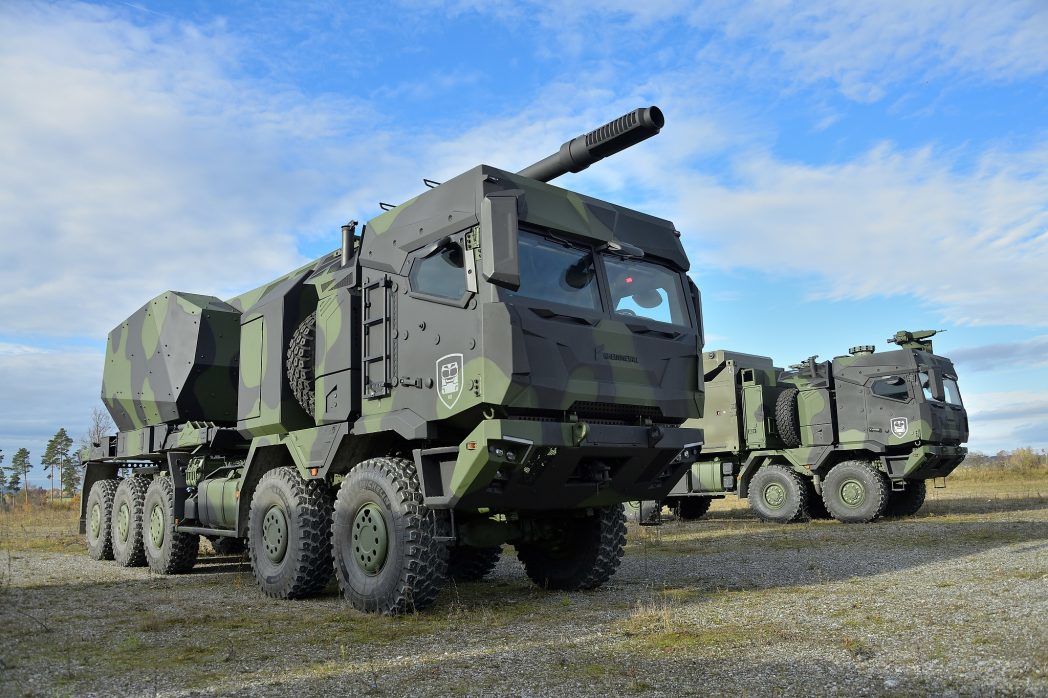
With the HX3, Rheinmetall has presented a new generation of the proven vehicle family for logistical transport tasks and equipment carriers to the professional public. Under Corona conditions, the presentation to an international audience took place as a livestream from the truck factory of Rheinmetall MAN Military Vehicle (RMMV), the wheeled vehicle specialist in the Rheinmetall Vehicle Systems division, in Vienna.
The HX3 follows in the tradition of the Cat I trucks introduced in the mid-1970s, which led through the development stages Cat I A1, Cat II, SX, LX, HX and HX2 to the design status now presented. Based on the experience of over 30,000 military trucks delivered, combined with the findings from the operations of international users, a new mobility vehicle was built based on the current state of the art that can meet the future requirements of the armed forces.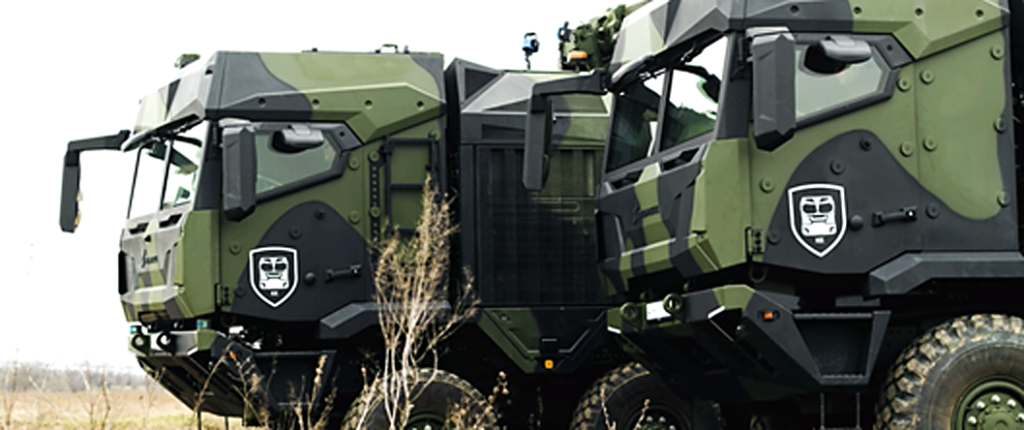
Rheinmetall has characterized the new transport system as “continuity and change”. “The future-proof military truck, which meets military and automotive megatrends thanks to new technologies, has been redesigned from the ground up. The user can expect, among other things, improved protection, further increased mobility, greater driving comfort and a digital interface architecture for an even more flexible range of uses and future performance improvements. At the same time, the valued core strengths of the HX2 and the family spirit are retained.”
With all-wheel drive vehicles with two, three, four and five axles, the HX3 vehicle family covers a wide spectrum of transport, ranging from cargo, logistics and passenger transport, primarily with containers and swap-body carriers, to carrier vehicles for sensitive precision systems such as radar or howitzers. The spectrum expands to include logistical and tactical tasks via the latter and via containers with mission systems.





The HX3 - like its predecessors - is designed from the ground up for military use under the harshest operating conditions. As “military off-the-shelf”, the vehicle family uses, wherever possible, robust standard assemblies from large series, some of which are additionally hardened for the special requirements. The basis is the heavy-duty chassis and powerful engines. From the front axle with eleven tons of axle load to the steered rear axle and active rear axle suspension, components are available that significantly improve road and off-road mobility.
The interface to the load is the torsion-free intermediate frame, which, for example, isolates the loaded container in the terrain from the torsion of the frame in the terrain. A fully automatic alternating loading system ALHS (Automated Load Handling System) is available for loading and unloading containers off-road, with which the loading process can be carried out quickly even off-road from the safe driver's cab, regardless of tilting between the load and the vehicle. To accommodate the heavy load and forces during firing, Rheinmetall has developed the Artillery Truck Interface (ATI), with which the HX3 10×10 can be used in the future as a standard basis for various artillery solutions or similar weapon systems.
The cab, the driver's main workplace, is the vehicle's control center. The modern dashboard from the MAN range provides all the necessary information about the driving condition and allows access to assistance systems such as brake assistant, adaptive distance and cruise control and lane departure warning via a newly designed electronic and electrical architecture.
A digital camouflage mode complements the traditional camouflage settings. This means that all transmission and reception functions can be switched off (“sending ban”) in order to reduce the digital signature.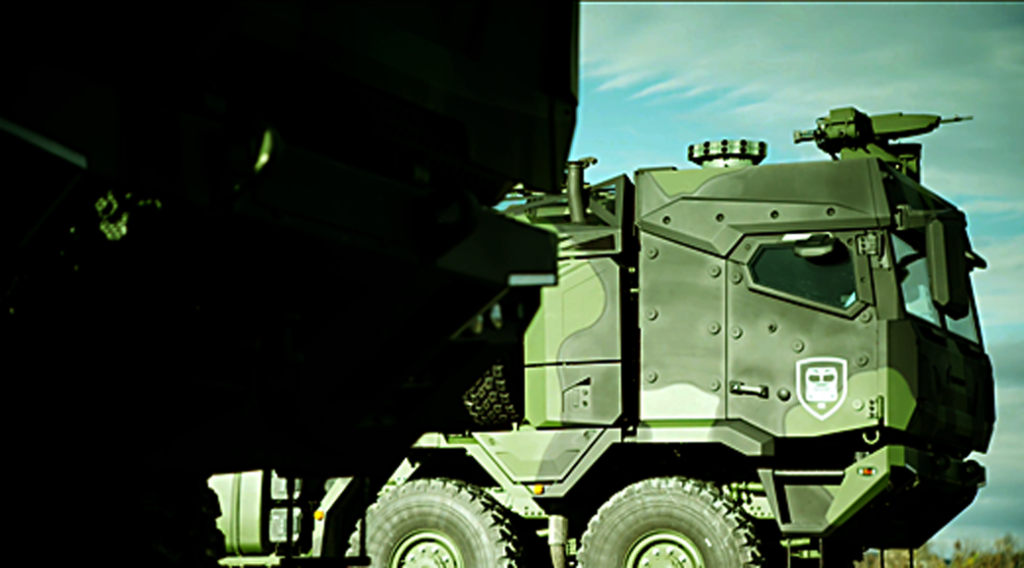
Thanks to standardized interfaces, future available technologies such as truck platooning or other automated applications can be integrated. The cabin is prepared with mounting rails to accommodate information and communication systems and offers storage space for the crew's equipment. Protection systems such as the Active Defense System (ADS), the Rapid Obscuring System (ROSY) or a remotely controlled heavy weapon station can be installed on the reinforced roof. The HX3 vehicles are optionally available with an armored cabin, the protection of which can be expanded modularly. The cabins can be exchanged as needed using the cabin exchange concept.
As a further development in the HX series, the HX3 benefits from the common parts concept with identical parts and functions wherever possible. Up to 80 percent of the same components make maintenance, servicing and spare parts inventory easier.
The three HX3s produced so far – a 10×10 with a 155 mm howitzer and two 8×8 container carriers – were presented in Vienna. These vehicles are now going into company testing, in which, among other things, performance and reliability are to be proven in field tests. The goal is to be ready for series production by 2024. A year later, the HX3 family will continue to grow with the heavy-duty tractor.
With the HX3, Rheinmetall has taken an important development step for the HX family of heavy off-road trucks. The development of digital systems and new technologies require regular adaptation of vehicles in the spirit of evolution. In addition to increasing the performance of the entire system, relieving the burden on the driver when driving the vehicle safely and protecting the crew through automation are also the results of further development. The development steps must not follow each other too quickly, otherwise training and logistics cannot keep up.
Gerhard Heiming
 Rheinmetall wants to invest in Hungarian IT provider 4iG
 Drone manufacturer EMT belongs to Rheinmetall
 Rheinmetall takes over Zeppelin Mobile Systems
 Australia ordered 211 Boxer
 Huta Stalowa Wola receives license for Rheinmetall tank gun
 Modernization Challenger 2 – RBSL Presents Demonstrator
 Survivor R becomes special car 5
 US Army develops light howitzer technology
 Rheinmetall competence center in Australia