







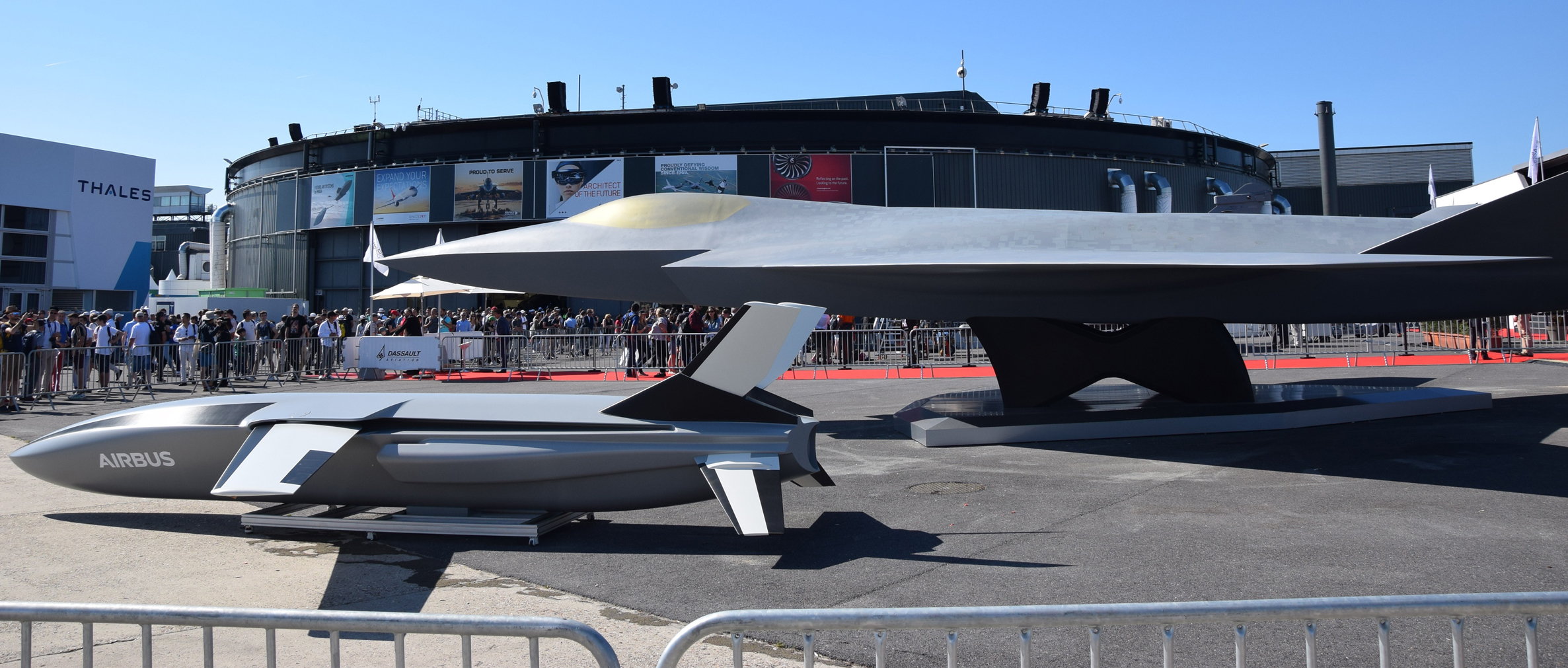

Indra, FCMS and Thales have jointly launched the next phase of development of the connected sensor suite designed to contribute to Next Generation Weapon System (NGWS) superiority. The NGWS, consisting of the next-generation combat aircraft and escort drones, forms the core of the Future Combat Airs System (FCAS).
Wie der Konsortialführer Indra in seiner neuen Projektzentrale anlässlich der Kick-Off-Veranstaltung mitgeteilt hat, wird das innovative Paket von vernetzten und verteilten Sensoren, Abwehrhilfen und Angriffssystemen (Networked and distributed Sensors, Defensive aids and Attack Systems, NSDAS) für die operativen Herausforderungen der 2040er Jahre konzipiert und soll die operativen Fähigkeiten des NGWS grundlegend verändern.

In the initial phases of the NGWS, the three leading European sensor system manufacturers developed a common vision of the sensor system in preparation for Phase 1B.
The collaborative and distributed cross-platform sensor architecture aims to increase the performance of each individual sensor and non-kinetic effector, according to Indra. This will give NGWS resources, consisting of the Next Generation Fighter (NGF) and Remote Carriers (RC), a multiplier effect to achieve their mission objectives.

According to Indra, phase 1B will trigger a wide range of functional, algorithmic and technological developments. It will consolidate the definition and architecture of the networked sensors as well as the critical components/building blocks of the RF and optronic sensors for the NGF and the different types of RC. The development phase is expected to start in 2028 to achieve the first operational capability of the NGWS in 2040.
The most important paradigm shift in this next-generation air combat system is the implementation of a system-of-systems approach at all NGWS levels, so that the capabilities of the entire system combination will be significantly higher than the sum of the individual components.
Editors / gwh
 A330 MRTT simulator for the French Air Force
 Vehicle program FAMOUS: Indra responsible for mission system
 Third implementation agreement for NGWS/FCAS signed
 Indra supplies electronic reconnaissance systems for German and Norwegian submarines 212 CD
 Mobile tower air traffic management system
 Radars for South Korean air traffic control
 Bundestag approves development funds for FCAS
 Future Combat Air System – FCMS consortium receives order for sensor network
 Spain orders 20 more Eurofighters