




Ole Henckel

Three out of four partners, France, Italy and Germany, have now given the green light for the start of the Eurodrone project. All that is needed is the official approval from Spain to be able to draw up the contract for the construction of the Eurodrone, said the Airbus chief engineer responsible for the project, Daniela Lohwasser, on Tuesday at her company's trade media briefing. The industry, i.e. Airbus Defense and Space, Dassault and Leonardo, are ready, said the chief engineer. After the approval of the Spanish Parliament, the contract to be processed via the European arms agency OCCAR could be available for signature after a few months.
The Bundestag had already approved the project, also known as the Medium-Altitude Long-Endurance Remotely Piloted Air System (MALE RPAS), in April and released the necessary funds amounting to 3.1 billion euros. (ESUTreported).
The Bundeswehr plans to procure seven drone systems and thus replace the Heron 1 and Heron TP drones that were previously used through operator contracts. A Eurodrone drone system consists of three aircraft and two ground control stations. It also includes ground support equipment, spare parts including warehousing, training and operational support for the first 6.5 years.
Mit den Systemen will die Bundeswehr in der Lage sein, luftgestützte Aufklärung und Überwachung bis in die Tiefe eines Einsatzgebietes zu betreiben sowie gegen stationäre und bewegliche Einzelziele zu wirken. Über die Möglichkeit zur Bewaffnung wird der Bundestag jedoch gesondert entscheiden. Weiterhin fordert das BMVg, wie aus der Antwort aus einer Kleinen Anfrage der Fraktion Die Linke hervorgeht, dass „der Flugbetrieb bei Tag und Nacht, unter Bedingungen des elektronischen Kampfes und auch unter widrigen Witterungsbedingungen einschließlich vorhergesagter bzw. gemeldeter moderater Vereisung, moderaten Turbulenzen sowie Flügen in Gewitternähe in mindestens zwei räumlich getrennten Einsatzgebieten“ erfolgen kann.

In addition, a single drone is expected to have at least 20 hours of standing time and the overlapping use of multiple systems ensures continuous reconnaissance for up to five days. Another answer to a small question from the Die Linke faction shows that the BMVg assumes that the first series aircraft can be delivered around 84 months, i.e. seven years, after the contract has been concluded. As things currently stand, the first system should be delivered in 2029/2030, depending on when the contract can be signed.
Airbus was originally expected to place the order in 2019 (ESuTreported).
In addition to Germany with seven systems, Italy plans to procure five systems. France and Spain have each indicated a need for four systems. The management of this European armaments project will be taken over by the Joint Organization for Armaments Cooperation (Organisation Conjointe de Coopération en Matière d'Armement, OCCAR). This expects the first flight of a prototype in 2026.
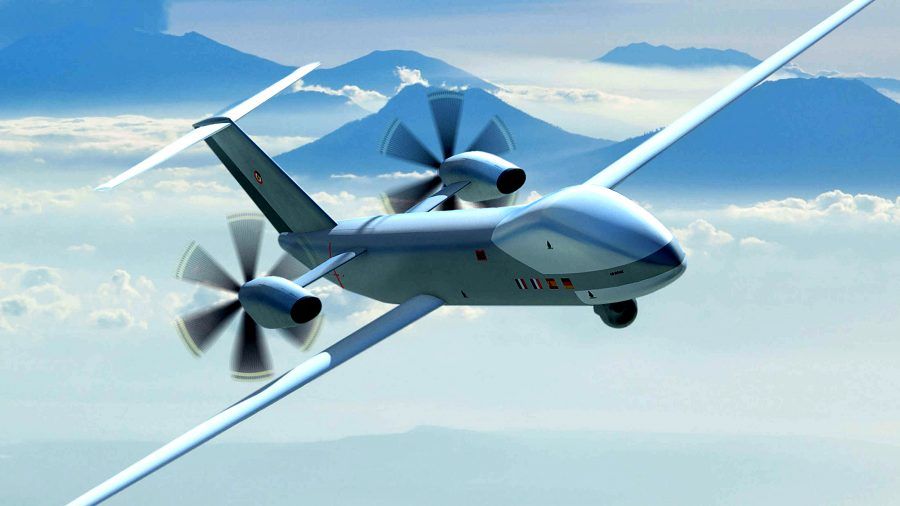
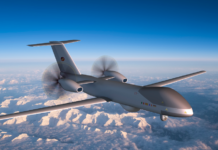
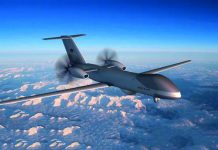
From Airbus' perspective, the Eurodrone will be the most powerful system in its class. The aircraft themselves will be 16 meters long, 6 meters high and have a wingspan of around 30 meters. The maximum payload is stated by Airbus as 2.3 tonnes, with a maximum take-off weight of 11 tonnes. The flight time of the drone should be between 18 and 40 hours and the maximum speed is around 500 km/h.
Chief engineer Lohwasser justifies the decision to use two engines for the Euro drone by saying that this significantly increases the safety factor, that the system is more robust and less maintenance-intensive and that the higher acquisition costs would be worthwhile in the long term. Lohwasser also assumes that two engines in the MALE class will be the new normal in the future.
According to Lohwasser, the Eurodohne will also be designed from the outset for integration into civil aviation. On the one hand, this enables the drones to fly freely in the airspace of the user states, and on the other hand, it also enables international overflights without prior, lengthy certification processes, according to the Airbus representative. Planning direct flight routes without having to take detours in order to always be close to emergency landing options is possible with the Eurodrone.
According to current plans, the industrial production of the Eurodrone will take place to some extent in all four countries. In France, Dassault Aviation is responsible for the flight safety and landing systems, the mission communication system and the central maintenance systems. In Spain, Airbus Spain is responsible for the aircraft pluck, tail unit, ground control system, tactical communication systems and propulsion system. Leonardo is responsible for manufacturing the wings, the airborne environmental and electrical control system, the mission system and the weapons control system in Italy. In Germany, which acts as the “lead nation” on the project, Airbus Germany is responsible for manufacturing the flight management system, the airspace integration system, the landing gear and the ground control station. In addition, the entire final production of the Eurodrone system will take place at the factory in Manching.
Ole Henckel
 Airbus and OCCAR sign contract for Eurodrone
 An important step towards the procurement of the Eurodrone
 EU gives 100 million euros to develop the Eurodrone
 Eurodrone – Another milestone reached
 The Euro drone
 Eurodrone – Airbus is aiming for an agreement by the end of the year
 India: Airbus receives major order for 56 C295 aircraft
 Airbus 2021 with strong profit growth
 Kazakhstan orders two Airbus A400Ms