





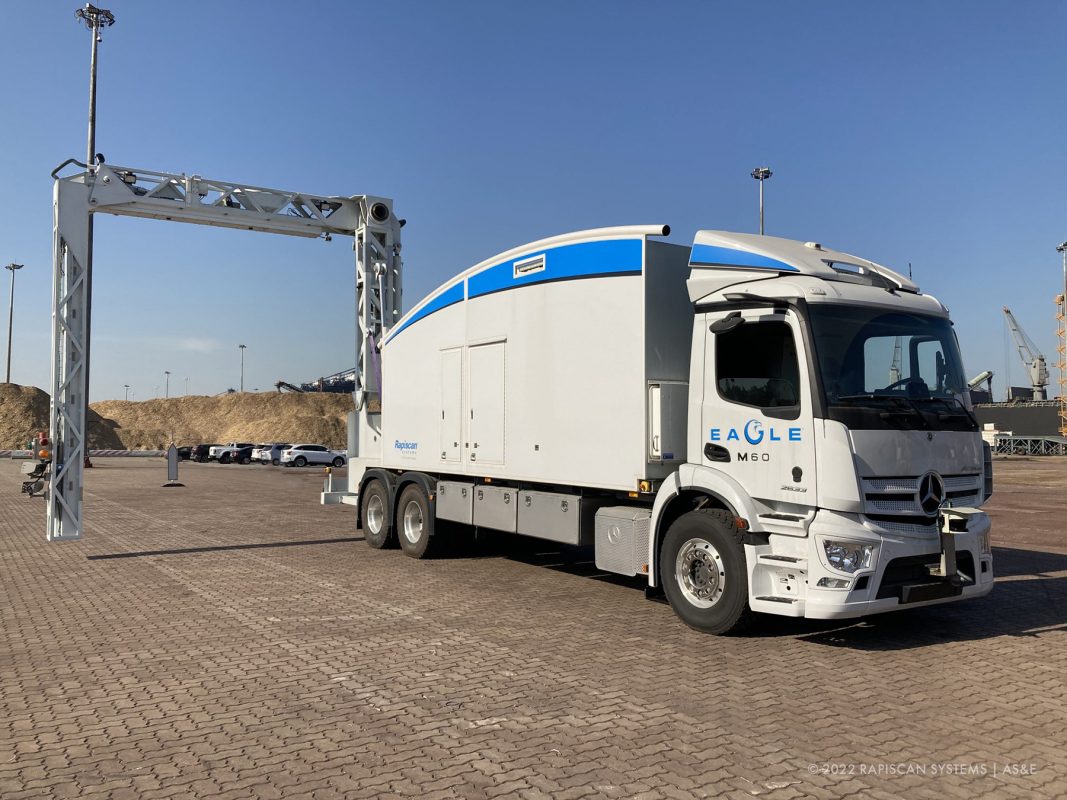

Das Bundeswehr-Beschaffungsamt BAAINBw hat bei der steep GmbH drei Systeme „Fahrzeugdurchleuchtungsanlage“ bestellt, die für die Kontrolle von Fahrzeugen und Besatzungen UN-Stabilisierungseinsatz MINUSMA in Mali bestimmt sind.
Wie das BAAINBw mitgeteilt hat, erfolgt die Beschaffung auf Initiative des Einsatzführungskommandos der Bundeswehr als dringende Beschaffung von im Einsatz benötigtem Gerät. Die finale Abstimmung eines unterschriftsreifen Vertrages sei im Amt innerhalb von nur einer Woche erreicht worden.
According to the agency's description, the system can completely screen vehicles up to a height of around 4.50 meters. It consists of three commercially available Eagle M60 vehicle scanners from Rapiscan. According to the manufacturer, steel walls up to 30 centimeters thick do not pose an obstacle to detecting and identifying individual objects. Even the smallest wires from a possible booby trap can be displayed. The scanner can distinguish between organic and inorganic substances by color, which makes the detection of explosives, for example, much more reliable.



Parallel to the vehicle check, the driver can be examined in a radiation-protected manner for hidden objects on the body and in hand luggage, and biometric features such as fingerprints and iris scans can be processed. Among other things, a metal detector sheet, a baggage X-ray scanner and also a millimeter wave scanner, colloquially known at airports as a "nude scanner", are used.
Wie das BAAINBw schreibt, ist die mobile Anlage in klimatisierten 20-Fuß-Containern verbaut und kann universell per Land-, Luft- oder Seeweg transportiert werden. Eine Anlage bestehe aus dem Durchleuchtungstruck und einer abgesetzten Kontrolleinheit (Container), in der das Personal aus bis zu 500 Meter Entfernung die Kontrolle geschützt überwachen könne. Ein Servercontainer vervollständige das System.

Für den Einsatz sind nach Angabe des BAAINBw zwei Lkw nebst Container-Ausstattungen vorgesehen. Eine weitere Anlage soll als Ausbildungsanlage in Deutschland verbleiben.
Die Lieferung der Ausbildungs- und Einsatzanlagen wird für das dritte Quartal 2023 erwartet.
Editors / gwh
 New lithium-ion batteries for submarines
 Luftwaffe receives container systems for aerial photo analysis
 Electronic Knee Board integrated in the CH-53 simulator
 Bundeswehr buys up to 249 semi-trailers for heavy-duty transport
 New laser target illuminators for fighter planes
 Battlefield recovery equipment for armored recovery vehicles
 Fourth class F 125 frigate handed over to the Bundeswehr
 Bundeswehr supplements the stock of drones of the MIKADO class
 Bundeswehr: Expansion of genome sequencing capabilities