







Gerhard Heiming

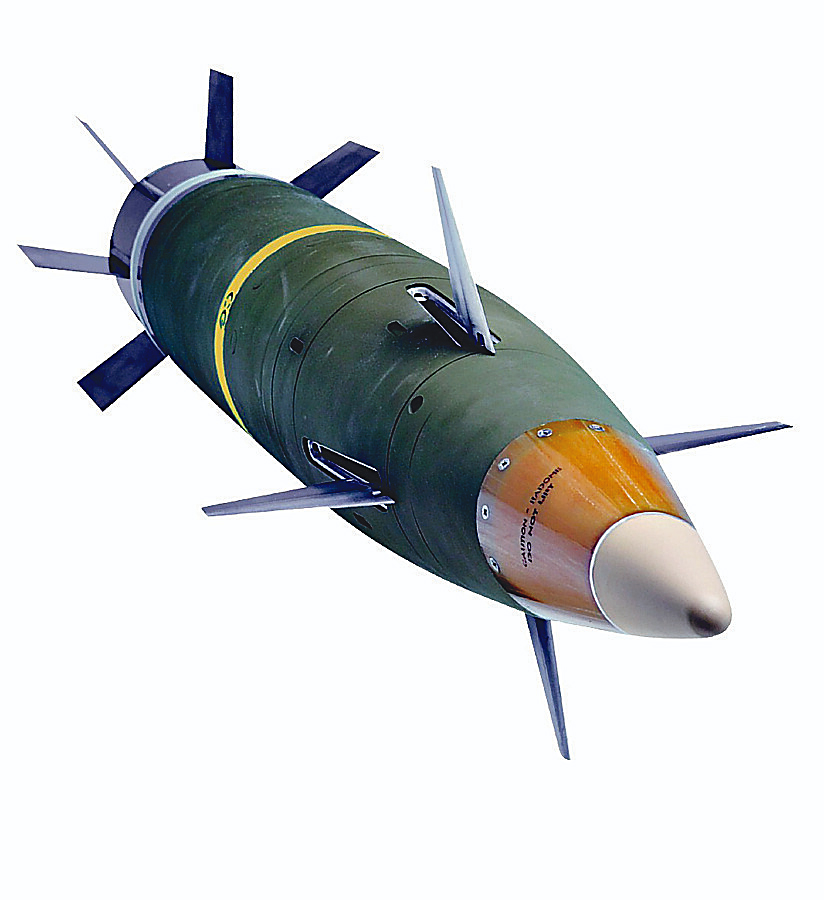
The Defense Security Cooperation Agency (DSCA) has announced that the US government has approved the Dutch government's purchase request for 199 Excalibur missiles. Accordingly, the Dutch army will receive 199 Excalibur Increment IB tactical projectiles with the American designation M982AI. The program costs are estimated at around 37 million euros and include technical support, training, special tools and other logistical equipment.
Das Excalibur-Geschoss gehört zur Klasse der präzisionsgelenkten Artilleriemunition. Das Geschoss wurde von Raytheon und Bofors gemeinsam entwickelt und ist erstmals 2012 von der U.S. Army in Afghanistan eingesetzt worden. Das 155-mm-Geschoss hat einen Base-Bleed-Antrieb zur Reichweitenerhöhung (über 40 km) und an der Geschossspitze Steuerflächen zur Lenkung des Geschosses im Endanflug. Die Lenkung basierend auf GPS-Daten beginnt auf dem Höhepunkt der ballistischen Flugbahn und ermöglicht eine präzise Steuerung ins Ziel. Abgefeuert in der oberen Winkelgruppe können in urbanem Umfeld Ziele hinter hohen Gebäuden bekämpft werden. Durch die erreichte Genauigkeit von deutlich unter fünf Metern werden Kollateralschäden vermieden.

The US Army and other users have so far fired over 1,400 rounds of Excalibur in various operational areas. The expectations have been confirmed. According to the US Army, ammunition consumption was reduced to a seventh. This makes up for the higher procurement price and reduces the need for transportation.
In the Netherlands, Excalibur will be fired with the self-propelled howitzer (PzH) 2000 NL, which is designed for the NATO standard caliber 155 mm. The PzH2000 is a joint product of Krauss-Maffei Wegmann and Rheinmetall, was introduced into the force in 1998 and is used in Germany and the Netherlands in five other NATO countries and Qatar.
Raytheon has further developed Excalibur and reported in February 2020 on the Excalibur S version, which received a semi-active laser seeker. This made it possible to combat moving targets measuring 3 x 3 meters.
Gerhard Heiming
 EXCALIBUR S – 155mm artillery shell hits moving targets
 Directed artillery grenade Katana in live fire
 Iron Sting final phase guided mortar ammunition
 Practice ammunition 127 mm for frigates F125
 US Army procures new M110A1 SDMR telescopic sight rifle from HK
 US Army – Development contract for a next-generation air defense radar
 Seven Patriot air defense systems for Romania
 Tender for Bradley's successor OMFV
 RCV – construction contracts for remotely controlled combat vehicles