



Interview with Lieutenant General Ingo Gerhartz, Inspector of the Air Force

“There is no alternative to high levels of commitment, determination and reliability,” emphasizes the Air Force inspector, Lieutenant General Ingo Gerhartz, in an interview with the magazine ESuT.
Dear General, what significance does the ILA have for the Air Force? What are your priorities this year?
The ILA is the only platform in Germany on which the Air Force can display its entire range of capabilities. The Bundeswehr is the largest individual exhibitor, and that alone underlines the importance of this exhibition. For us, it is the central place to engage in professional exchanges with our partners from business and science. We also seek contact with political decision-makers and of course with citizens.
The success of the ILA also represents the fascination with the third dimension. We want to use this to motivate young people to become part of our Air Force team. We feel that beyond the general fascination, interest in the Air Force has grown significantly. This year, when we present modern weapons systems to an aerospace-loving public, we do so with the clear understanding that responsive and modern armed forces are necessary to guarantee the security of Europe. One of our priorities is to make the turning point tangible. At least since the Russian war of aggression against Ukraine, we have again focused more on national and alliance defense. At the beginning of 2022, the federal government set up a special fund of 100 billion euros to improve the Bundeswehr's equipment. We want to give visitors to the ILA a tangible understanding of how exactly this happens and what systems we invest in. We stand side by side with industry and partner nations – without them we would not be able to complete our orders.
About which new capabilities shall the air force futurefeature?
Thanks to the special fund, the Air Force is experiencing a significant increase in its core competencies. Last year in particular, we initiated important procurements that will have a lasting impact on the future of the Air Force. With the new F-35 stealth jet, we will take a big step forward from 2026. We will then continue to secure our nuclear participation with a fifth-generation fighter aircraft.
The Eurofighter remains the backbone of the flying air force and will once again demonstrate its reliability during our multinational “Pacific Skies” deployment this summer. The importance of our Eurofighters will be increased once again with the decision that we will begin to enable them for electronic warfare. The Eurofighter is in continuous evolution and we have a duty not to lose sight of the future after the end of the so-called Tranche 4.
A further step has been taken with the decision in favor of the CH-47. The Chinook will replace our 50-year-old CH-53 from 2027. With its armed search and rescue capability, this heavy transport helicopter will also fill a capability gap. When it comes to flying weapon systems, it was particularly important to us that they are on the market and can be deployed relatively quickly. Ultimately, a turning point also means that we can fulfill our mission now, not in ten years.
In der bodengebundenen Luftverteidigung werden wir mit der Anschaffung des weitreichenden israelischen Systems Arrow eine anerkannte Fähigkeitslücke in Europa, aber auch international schließen. Wir können damit Flugkörper in über 100 Kilometern Höhe abfangen, also bevor sie überhaupt in die Erdatmosphäre eintreten. Für den Nah- und Nächstbereich schaffen wir das deutsche Flugabwehrsystem IRIS-T SLM an. Und mit der Modernisierung des Systems Patriot erhalten wir unsere Reaktionsfähigkeit in den unteren Abfangschichten. Nicht zuletzt werden wir mithilfe des Sondervermögens auch unsere Fähigkeiten in der Dimension Weltraum ausbauen. Noch in diesem Jahr bekommen wir ein eigenes Radarsystem, mit dem man zum Beispiel feststellen kann, wann ein Satellit in die Atmosphäre eintritt. Außerdem werden Teleskope beschafft, die noch weiter in die Ferne schauen können. Und wir investieren in neue Fähigkeiten, um Bedrohungen und Angriffe fremder Satelliten im Orbit abwehren zu können.


How will the Air Force fight and operate with this in the future?
First of all, we will never use all these skills alone. We will always operate together with our partners and allies, i.e. within the framework of NATO, EU or UN. With the F-35 we not only get the most modern fighter aircraft in the world, which is strongly protected from being discovered and attacked by foreign air defense systems thanks to its special stealth technology. We will also receive a fighter jet that is operationally proven around the world and will become a standard model in NATO. The CH-47 also offers the same cooperation potential. 20 other nations use this helicopter and it has seen almost everything from Afghanistan to Mali. The Chinook will allow us to cover the entire spectrum in terms of transport capabilities in the future - from humanitarian aid to crises and war.
On territorial missile defense: With the two systems Arrow and IRIS T-SLM as well as with a modernized Patriot platform, we are, firstly, significantly improving our leadership capabilities through standardized interfaces. Secondly, for the first time we are able to cover all altitude ranges in NATO's integrated air defence. German air defense has been part of the integrated NATO air defense since 1960 and has operated continuously and exclusively in a joint network ever since. And the Russian war of aggression in Ukraine shows us every day the need for functioning air defense. We are investing in additional capabilities in the space domain in order to be more self-sufficient in the future in the sense of refocusing on national defense. So far we have relied heavily on data from our allies' devices.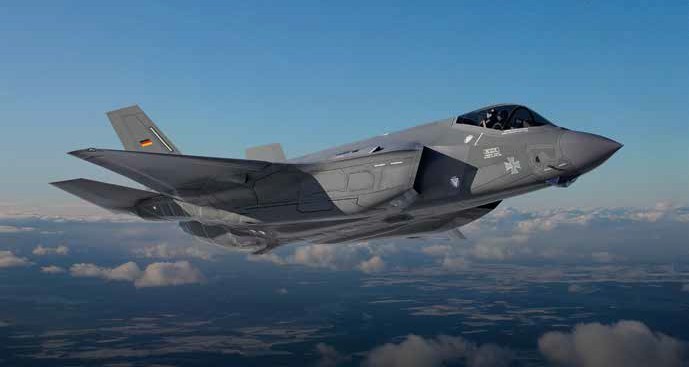
At the beginning of April, the Federal Minister of Defense announced a structural reform for the Bundeswehr. What does this mean for the Air Force?
Mit seinen Strukturentscheidungen hat der Minister seinen Plan für eine handlungs- und reaktionsfähige Bundeswehr im gesamten Einsatzspektrum bekanntgegeben. Für uns bedeutet das, dass wir Aufgaben der Zulassung und Nutzung militärischer Luftfahrzeuge sowie des militärischen Flugbetriebs der Bundes- wehr bei uns bündeln werden, damit die Verantwortung dafür unter einem Dach verortet ist.
On the one hand, the Bundeswehr Aviation Office - responsible for traffic safety, airworthiness of aircraft and equipment, but also for regulatory aspects - reports directly to me as an inspector. Secondly, we are setting up a so-called Bundeswehr Continuing Airworthiness Management Organization in the Air Force, the CAMOBw. This is intended to monitor the technical condition of the aircraft, but also to control and be responsible for measures.
With both steps, we will become more operational, more efficient, and faster in our processes - and therefore more capable of war in the air dimension. Availability and readiness are the basis for credible deterrence and, if necessary, the successful defense of our country and our allies. The rest of the Air Force's structure must also fit into this. The starting point for our considerations is our mission in the context of national and alliance defense: to achieve and maintain air superiority and the usability of space. We are currently examining various options with the necessary speed but also with the necessary thoroughness.
What are the focal points of cooperation within NATO and the EU, for example in various armaments projects, but also in EMAR/DEMAR?
Multinational cooperation has always been at the core of our actions; they form the DNA of the Air Force. In NATO and the EU, common capabilities are being developed in a variety of formats so that the systems of the individual states can operate with one another and be used together. Given the current situation, the first thing that comes to mind is the German-French air transport squadron in Évreux: two of our Hercules C-130J aircraft were temporarily stationed in Jordan in March and April in order to drop relief supplies over the Gaza Strip from there. They were handled on site by French comrades. Thanks to this teamwork, we were able to immediately help those in need in the war zone. This was practical and mission-oriented cooperation par excellence. Other successful examples include our cooperation with the other three Eurofighter nations Great Britain, Italy and Spain or the development of the Future Combat Air System, which we operate together with France and Spain.
We make another significant contribution to improving our interoperability by using EU-wide agreed standard procedures for maintaining the airworthiness of our military aircraft, the so-called European Military Airworthiness Requirements. These EMARs are derived from civil practice and are transposed into national law by the Bundeswehr Aviation Office; For us, these documents are called DEMAR, which stands for German Military Airworthiness Requirements. The implementation of these rules in the respective nations facilitates cooperation in the joint development and production, but also in the operation of aircraft. The new CAMOBw plays a central role here. In the future, it will ensure that the requirements of daily operations are centrally monitored and adhered to from a single source for all military aircraft - planes, helicopters, drones. This will mean that for the first time we will have the ability to fully implement the approval rules agreed at European level.
What major projects and exercises with other nations outside Europe, for example in the Indo-Pacific, are on the agenda soon?
Ein zentraler Termin und Höhepunkt in unserem Terminkalender ist die multinationale Verlegeübung „Pacific Skies 24“, die kurz nach der ILA beginnt. Die Luftwaffe fliegt dann quasi einmal um die Welt. Von Ende Juni bis Mitte August werden sechs unserer Verbände mit europäischen Partnern üben. Neben Frankreich, Spanien und Großbritannien beteiligen sich auch die USA, Australien, Japan und Indien. In unterschiedlichen Übungen werden Tiefflug, Luftangriff und Luftbetankung trainiert. Wir beginnen in Alaska, dann geht es weiter nach Japan. Anschließend teilt sich unsere Flotte. Ein Teil unserer Eurofighter fliegt nach Australien und nimmt dort an der Übung „Pitch Black“ teil. Ein anderer Teil wird sich vor beziehungsweise über Hawaii gemeinsam mit der Marine am US-Großmanöver „Rim- pac“ beteiligen. Zum Schluss nehmen wir erstmals an einer Übung in Indien teil. Mit „Pacific Skies 24“ zeigen wir ein europäisches Gesicht in einer Region, die für uns alle sehr wichtig ist. Und wir beweisen nach „Rapid Pacific 22“ zum zweiten Mal, dass wir neben unseren Daueraufgaben in Deutschland und den Bündnisverpflichtungen an der NATO- Ostflanke im Krisenfall auch schnell und flexibel in anderen Regionen der Welt präsent sein können. Für mich trägt das Vorhaben den Titel „Partnerschaften in der Zeitenwende“.
A major issue for the entire Bundeswehr at the moment is the question of endurance in a prolonged conflict, for example when it comes to spare parts and ammunition. What is it like in the Air Force?
One thing first about our operational readiness: like our equipment, it has steadily improved in recent years. For our flying systems, it has increased from 35 percent since 2018 to currently a good 80 percent. We achieved this, among other things, through closer cooperation with industry.
Less visible, but just as important for our reliable order fulfillment, is the proactive procurement of ammunition and spare parts. We are currently working hard to set up appropriate warehouses and stockpile supplies for highly intensive operations. Of course, we need enough storage space for this. Here too, we always keep an eye on interoperability with our allies. The wars and conflicts that we are currently experiencing are real, the advance warning times are short, the unpredictability is great and our ability to forecast is weak. There is no alternative to high levels of commitment, determination and reliability.
You also advertise for staff at the ILA. How do you assess the personnel situation in the Air Force and how do you want to permanently recruit enough qualified personnel?
The Bundeswehr as a whole has to hire around 20,000 new people every year just to cover the regeneration needs. We can do that, and hardly any other employer in Germany can do that. Finding qualified personnel is a constant challenge for all armed forces, but also for society as a whole. Since we have many technology-focused jobs in the Air Force, we are particularly in competition with civilian companies. IT specialists and technicians are needed everywhere. Nevertheless, we have no reason to worry. This is certainly because we can offer an interesting overall package: We have state-of-the-art weapon systems and highly professional training, for example our fighter jet pilots are trained in the USA. We are obviously a very attractive employer for many young people, especially in the aviation sector. Although many fail in this area due to the high demands, they still continue to be enthusiastic about the Air Force.
Of course we won't rest on our laurels. Today we have to approach young people much more proactively than before in order to make the Air Force tangible and tangible for them. On the one hand, we try to do this by using new communication channels; Since the beginning of the year, “Team Luftwaffe” has also been active on Instagram. But that's what we're trying to do at the ILA: The Air Force is here to talk to, touch, walk around and get in.
Very honored MrGeneral,many Thanks for the interesting information!
Burghard Lindhorst asked the questions.

