





Denise Dintner and Birte Chilcott

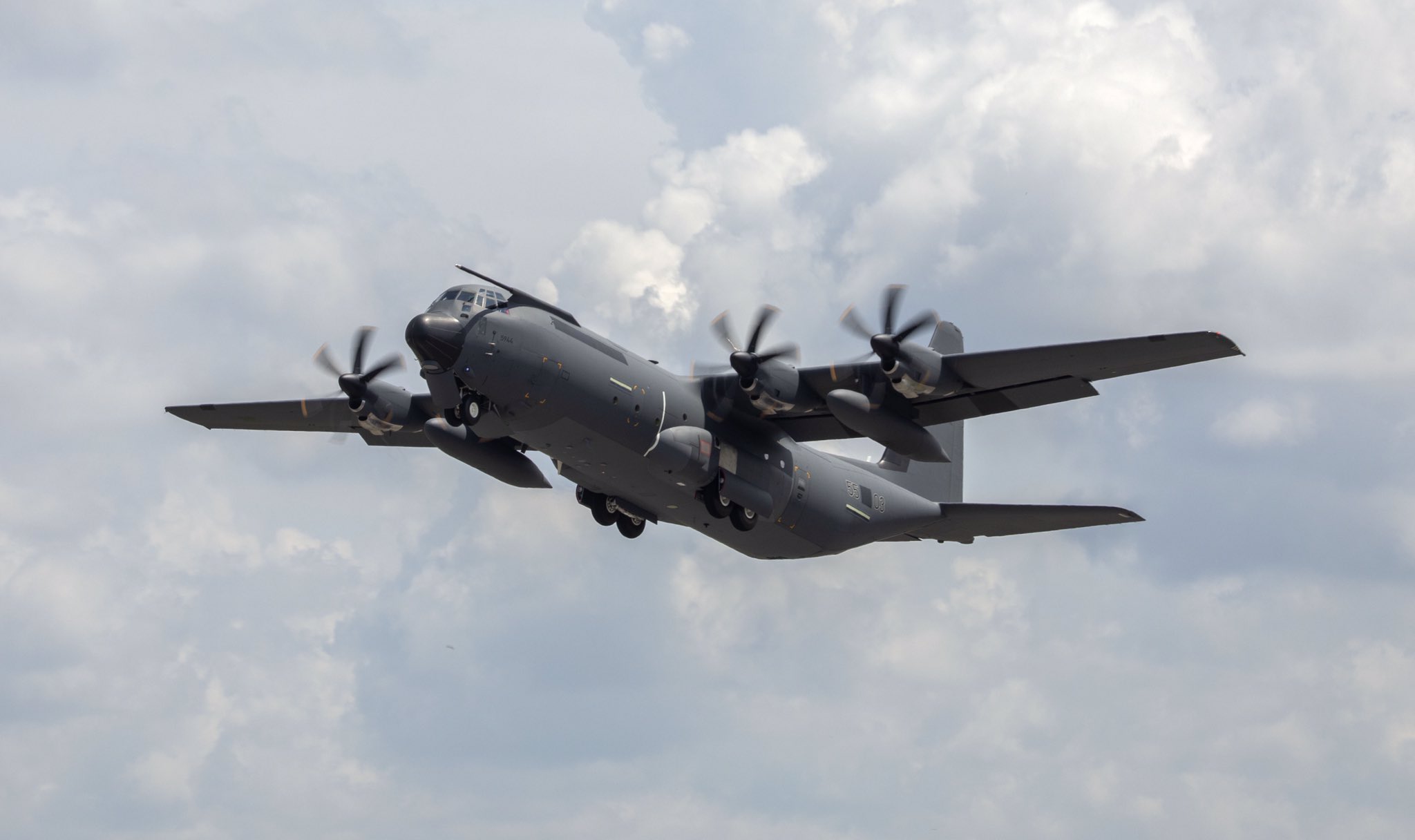
A cooperation that is unique in Europe: ten American Super Hercules, stationed in France, flown by German-French crews.
Year 1975. In Saigon, today's Ho Chi Minh City, 452 people are evacuated by a military transport plane. The plane lands safely in Thailand despite being nine tons overloaded.
When it first flew in August 1954, no one probably believed that the prototype from the manufacturer Lockheed Corporation (now Lockheed Martin) would become the most used and longest-built aircraft model in the coming decades. The transport aircraft has been in series production since 1956. Over 40 versions of the C-130 have been manufactured over the years, it has been sold to more than 20 countries and is still in use today. A real successful model. Their robustness and the fact that they have proven themselves over decades made them the heart of an unprecedented cooperation in the century.
Success story continues binational
In April 2017, the then German Defense Minister Ursula von der Leyen and her French counterpart Jean-Yves Le Drian agreed on a joint project. A binational squadron was to be created in France and the latest model of the C-130 would be the “workhorse”. The so-called J model, also known as “Super Hercules”.
Why exactly this transport aircraft? After the C-160 Transall was retired, there was a capability gap in protected tactical airlift when operating from airfields with limited infrastructure, for risk and crisis management missions, and in support of special forces operations. Despite its qualities, the Airbus A400M cannot completely close these gaps. It is larger and heavier than the Hercules and therefore cannot easily operate on very small, unpaved landing pads. However, with a larger payload than the Transall and four engines instead of just two, the Hercules is not a direct successor to the C-160. France and Germany faced the same problem and decided to use synergies.
2019, zwei Jahre nach dem ersten Regierungsabkommen, begannen die Bauarbeiten für die gemeinsame Lufttransportstaffel auf der Base Aérienne 105 in Évreux, einer Stadt in der Normandie mit etwa 50.000 Einwohnern, 90 km nordwestlich von Paris. Ein Pilotprojekt, das es in dieser Form in Europa noch nie gegeben hat. Zwei Jahre nach der Grundsteinlegung nahm die binationale Lufttransportstaffel (Binational Air Transport Squadron), kurz BATS, den Betrieb auf. Anfänglich nur mit den vier bereits vorhandenen französischen Maschinen, bis im Februar 2022 die erste deutsche C-130J aus den USA nach Frankreich überführt wurde. Seit April 2024 ist die Flotte der BATS vollzählig. Die Staffel verfügt jetzt über insgesamt zehn einsatzfähige Super Hercules. Sechs davon fliegen unter deutscher Hoheitsflagge, die anderen vier unter französischer. Die Flugzeuge werden aber nicht ausschließlich von der eigenen Nation geflogen, ganz im Gegenteil.


The idea behind the relay from the start was practical cooperation. Everything can and should be done together. German soldiers can completely take over the activities of their French counterparts and vice versa. That's what makes this binational relay so unique, among other things. A French aircraft can certainly have a German-French pilot or cargo master team under German command. This concept of mixed crews runs through the entire season. No matter which office you look into in the flying, leadership or technical areas, you will always see two different uniforms - the French and the German, but only hear one language: English. Because that is the working language in the binational air transport squadron. This is a challenge for both sides. In order to overcome this hurdle, English courses are regularly offered for both nations.
In preparation for their future jobs, the German soldiers also learn French. This makes social integration in the country much easier, whether when talking to neighbors, shopping or visiting the doctor.
Many of the BATS members bring their families with them from Germany as they are currently being transferred for a period of three to six years. The unusually long period of deployment abroad is due to the fact that pilots, cargo masters and technical staff have long training periods before they are considered fully trained and fully operational. Since the aircraft type is not flown in Germany, the existing expertise at the site in Normandy should be retained for as long as possible.
Spouses can also take part in language training if there is free space at the federal educational institution. Otherwise, financial support for a required language course can be applied for through the Bundeswehr and this can be carried out in France. For the smallest members of the family, a so-called “Section Internationale” was founded in the schools in Évreux in order to make the transition and integration into the French school system easier for the children. The aim is also to ensure that the children find their way back into the German school system when they return to Germany and that the school qualifications they acquired in France are also recognized. When it comes to learning the language, younger children in particular are a big step ahead of adults thanks to their curiosity and lack of inhibitions about making mistakes. After a very short time, most of them speak accent-free French that their parents envy.
For the soldiers, the family is not only a source of support in everyday life and a piece of home in France, but also provides the necessary security and stability to deal with the challenges of everyday service and the demands that an operational unit places on its personnel. to master.
Although it is still a very young unit, the volume of orders is high due to the prevailing security situation. As the situation develops in Ukraine and the Gaza Strip, the squadron is already making an important contribution within the scope of its mission.
The binational orders in the area of logistical and tactical air transport, which predominantly come from the European Air Transport Command (EATC), pursue common goals for both nations. In addition, the German Air Force also has its own national orders. These include:
The German portion of the squadron was able to reach the first milestone, initial operating capability (IOC), in September 2023. The next national goal is to achieve Final Operating Capability (FOC) between late 2024 and early 2025. This means that the full range of tasks and national interests can be covered by the Binational Air Transport Squadron.
Until then, it is important to build and expand the skills and abilities of the crews and technical staff through regular training. This includes practice flights, missions and the use of the training center right next to the squadron building with various simulators for pilots and load masters.
There are currently around 230 German and French soldiers in the squadron. In the coming months the number is expected to increase to around 260. The squadron is led by a French squadron captain, his deputy is German, both with the rank of lieutenant colonel. This division of nationalities was determined this way when the squadron was set up. In addition, Base Aérienne is home to the National Support Element with 15 soldiers and a small civil administration who support the flying squadron.
Since its official commissioning two years ago, the air transport squadron has grown in terms of personnel and material and the members of both nations have grown together. Despite cultural differences, one can speak of a “One Nation Mindset”. Nevertheless, the relay continues to face challenges. This includes the standardization of standards, regulations and training concepts in order to do justice to sometimes different country specifics, but also taking into account the different mission priorities of the two nations. These often cannot be solved at a personnel or squad level, but require political decisions at a higher level. This requires patience.
Although binational decisions take more time than purely national ones, the relay could not achieve the same without the synergy effects. The Binational Air Transport Squadron has demonstrated its rapid operational readiness and endurance in various missions. It covers a wide range of tasks, has a high level of staff training and can draw on a wealth of experience. These successes could only be achieved together.
The current volume of orders and operations, due to the prevailing security situation, makes it clear that the capabilities of the Hercules squadron are more in demand than ever. The binational air transport squadron shows on a small scale that interoperability of armed forces and military cooperation can work in Europe.
The next big step will be to expand the joint, binational missions. The humanitarian aid operation in the Gaza Strip at the end of March 2024 was a big step in the right direction.
Captain Denise Dintneris a press officer.Captain Birte Chilcottis an officer in military intelligence at the DDO/DtA EDT (senior German officer German part Escardron de Transport) in Évreux.