






Hans Uwe Mergener

Aspides, the EU naval mission in the Red Sea, cleared a major hurdle in Brussels this week. Although it was only an informal meeting of the defense ministers without a decision in nature, it was sufficient enough to set the course for further action. “Our goal is to establish and launch Operation Aspides no later than February 19th. And I am sure we will do that,” Josep Borrell said at the end of the EU’s informal Defense Ministers Council on January 31.
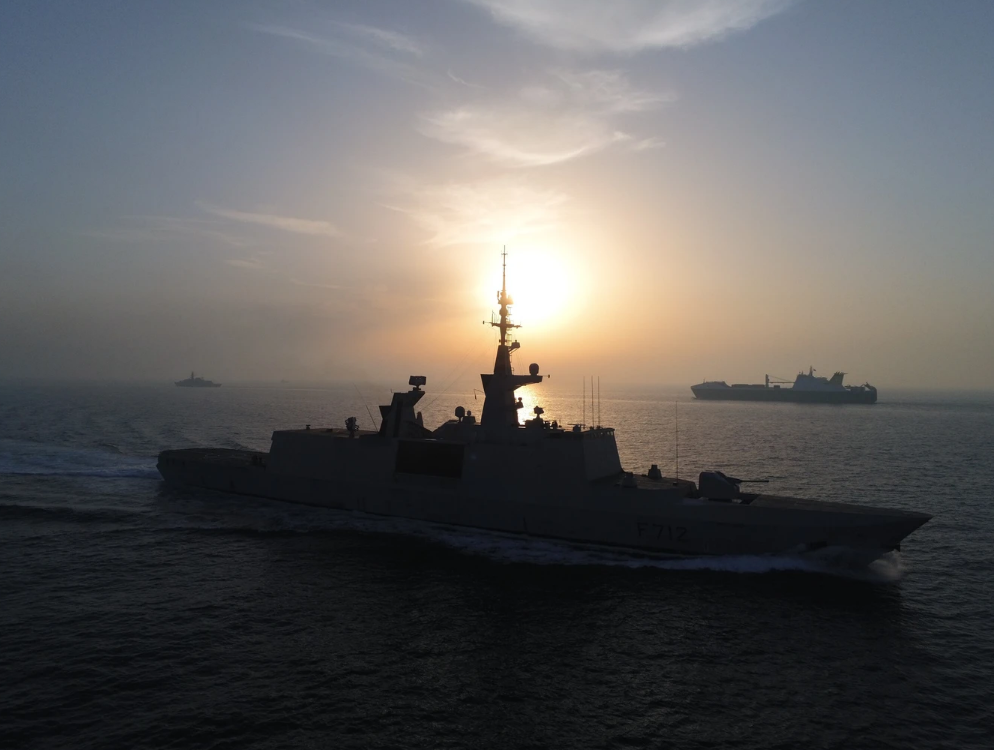
According to him, the member states are strongly committed to the EU mission to protect merchant shipping in the Red Sea from attacks by the Yemeni Houthis. Seven EU countries are ready to provide ships or aircraft for the mission. Belgium has already agreed to send the frigate “Louise Marie” (F-931). According to information from marineschepen.nl, the Dutch frigate “HNLMS Tromp” could at least be associated with the EU mission on its trip around the world. Planning is underway in the neighboring country and the parliamentary process has been initiated. From Greece, the frigate “Hydra” is to join the European company in the Red Sea. Rome promised the participation of a unit for the duration of the mission. Germany has planned to launch the frigate “Hessen”. According to our information, parliamentary proceedings could take place in the week of 19-23. February. As we hear, the “Hessen” will sail on February 8th. Their deployment to the operational area is planned depending on whether the Bundestag mandate is granted.
Meanwhile, the Danish frigate Iver Huitfeldt left its home base on January 29 to take part in the US-led Operation Prosperity Guardian from mid-February.
Während die Streitkräftegestellung auf gutem Wege zu sein scheint, so ist dem Vernehmen nach die Frage des Hauptquartiers der Operation (OHQ) noch nicht finalisiert. Griechenland warf sein Joint Force Command South Center mit Sitz in Larissa in den Ring. Es steht neben fünf anderen nationalen EU-Kommandozentralen in Deutschland (Ulm), Frankreich (Paris), Italien (Rom), Spanien (Rota) und – fallweise – in Polen (Krakau) für die Planung, Führung und Steuerung von EU-Operationen auf militärisch-strategischer Ebene außerhalb Brüssels zur Verfügung. Nach Nicolas Gros-Verheyde vom sicherheitspolitischen Blog B2 soll das griechische Angebot auf fruchtbaren Boden gefallen sein. Dabei könnte sich eine griechische Führung mit französischem Stellvertreter herauskristallisieren. Womit dann noch über die Führung in See zu entscheiden wäre. Das bewährte Muster ist ein zwischen den teilnehmenden Nationen wechselndes Force Command an Bord eines Schiffes.


With this constellation, one does not expose oneself to the risk of the Houthis turning against European partners among the Arab nations, which could possibly be the case through a headquarters in Abu Dhabi or Djibouti.
Einigkeit herrscht über den rein defensiven Charakter von Aspides. Borrell: „Auf keinen Fall werden wir Kampfhandlungen gegen jemenitischen Boden beginnen.“
This could make it possible to realize the ambitious schedule. Everyone seems to be able to get used to an independent operation. Borrell expressed his satisfaction at the press conference: “I think that in the end it says “no hay mal que por bien no venga”, as they say in Spanish. There is no evil that does not bring good. We ended up launching a mission with all of these capabilities on an ad hoc basis.”
This cannot hide the fact that it takes the Europeans a long time to come to a decision or even a measure. The Houthis began their attacks on civilian shipping in Bab-el-Mandeb on November 19, 2023 with the hijacking of the “Galaxy Leader”. Washington announced its Operation Prosperity Guardians on December 18, working in coalition with friendly nations to combat attacks. European nations are taking part. France, Italy and the United Kingdom are represented – albeit under different leadership constructs. At least she is taking Aspides as an opportunity to appear as a security architect. The EU has built up skills and infrastructure in the region from its Atalanta and Agenor operations. There are further relationships with the Arab region through its member states. We could build on that.
However, Brussels would have to move towards a holistic approach, which remains a pious wish given the current state of the EU. So for the time being, the economic giant EU remains a lightweight in terms of security policy. Also to the detriment of its members. In this specific case: European shipowners dominate the world market. Four of the ten largest container shipping companies are European companies; in 2023 they operated 2,360 ships (out of 3,632). They are directly affected by the attacks in the Red Sea and the extension of transport routes.
Europe doesn't just need maritime capabilities. But rather a common approach to crisis management and building peace. And not unilaterally, but in step with the transatlantic allies.
Next stops: February 2nd - EU Political and Security Committee (Council of Ambassadors), February 3rd - Council of Foreign Ministers in the informal Gymnich format, which means no formal decision-making is possible. The final decision could be made at the Foreign Affairs Council, the formal meeting of foreign ministers, on February 19.
Hans Uwe Mergener