






Hans Uwe Mergener

Manuela Schwesig, the Prime Minister of Mecklenburg-Western Pomerania, visited the Dutch naval shipyard Damen Naval in Vlissingen on March 11, 2024 as part of a delegation trip from the German Federal Council. She found out about the maritime industry in the Netherlands and German-Dutch cooperation in the field of shipbuilding and armaments technology.
She paid particular attention to the F 126 frigate project. The Peene shipyard, Wolgast, is one of the three shipyards where the future frigates of the German Navy will be built in her state. According to a press release from Damen Naval, Ms. Schwesig was very interested in everything she saw in Vlissingen. “We are pleased about the close cooperation between Damen Schelde Naval Shipbuilding and the Lürssen Group in the construction of the new frigates for the German Navy. This order will secure important industrial jobs at the Peene shipyard in Wolgast over the next few years. We are interested in further expanding the cooperation between Mecklenburg-Western Pomerania and the Netherlands in the maritime area in the coming years.”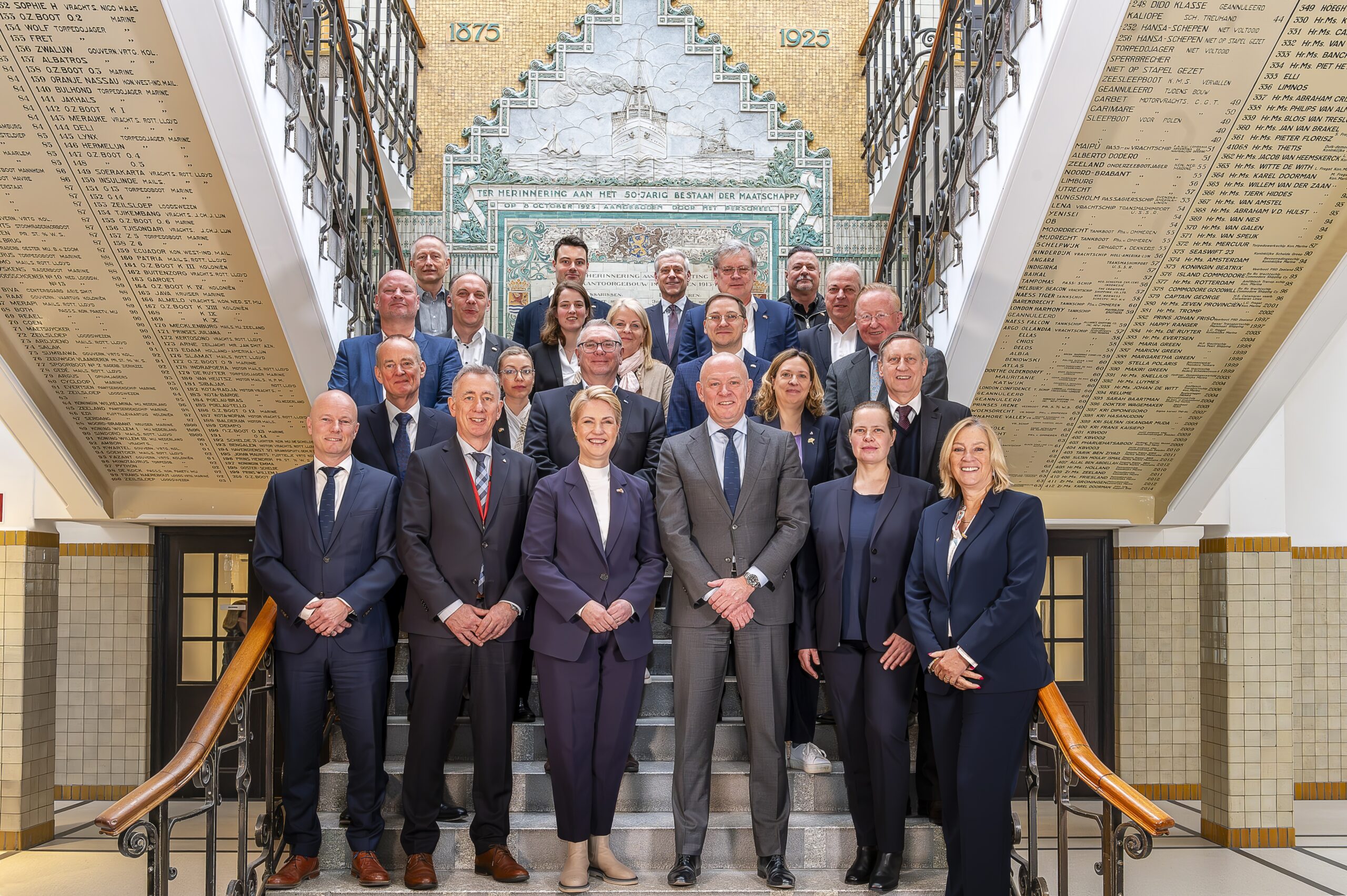
Der niederländischen Werft war insbesondere daran gelegen, Frau Schwesig einen Blick hinter die Kulissen zu gewähren. Der Besucherin sollte aufgezeigt werden, was zwischen der Auftragsvergabe zum Bau der vier Fregatten F126 im Juni 2020 und dem Brennstart der ersten Fregatte im Dezember 2023 geschah. Und was alles geschehen muss, damit aus den in Wolgast zu bauenden Achterschiffen eine fertige Multimissionsplattform werden kann, die die Fregatte F126 sein soll. Es ist nicht zwingend offensichtlich, dass der für eine Ausschreibung erstellte Entwurf zum endgültigen Schiffsdesign getrimmt werden muss. Ingenieure und Designer haben die Details auszuplanen. Häufig kommt es zu Loops, wenn sich durch die Auswahl von Komponenten (z.B. Waffensysteme) technische Gegebenheiten ändern. Wenn auch Damen als Generalunternehmer den Löwenanteil der Wertschöpfung in Deutschland realisieren will, d.h. dass deutsche Unterauftragnehmer zum Zug kommen, so laufen in Vlissingen die Fäden zum Auftragsmanagement und der Projektkontrolle zusammen.


In addition to the German frigate project F126, the Combat Support Ship for the Royal Netherlands Navy, the Belgian-Dutch joint project of anti-submarine warfare frigates and, since November 2023, a multi-purpose ship for the Portuguese Navy are in Damen Naval's order book. At the beginning of March, the Dutch Ministry of Defense announced two naval shipbuilding projects that are expected to be awarded nationally (ESUT reported). Damen Naval ist ein aussichtsreicher Kandidat.
The visit to Vlissingen can be seen as an extraordinary event, as it is the first time that a Federal Council President has visited a naval shipbuilding yard, especially abroad.
Federal Council President Manuela Schwesig is on an official visit to the Netherlands from March 9th to 11th, 2024. She met members of both chambers of the Dutch Parliament, was a guest at a dinner hosted by King Willem-Alexander and Queen Máxima and held talks with Dutch Prime Minister Mark Rutte. In addition to maritime security concerns, other topics such as European integration, climate policy, digitalization, education and culture were also discussed during the Federal Council President's visit to the Netherlands. Schwesig took part in the opening of the National Holocaust Museum in Amsterdam.
In her capacity as Prime Minister, Schwesig will be accompanied by a business delegation from Mecklenburg-Western Pomerania, which, according to the Schwerin state government, wants to make new contacts, particularly in the areas of maritime economy, ports, circular economy and bioeconomy.
Hans Uwe Mergener